
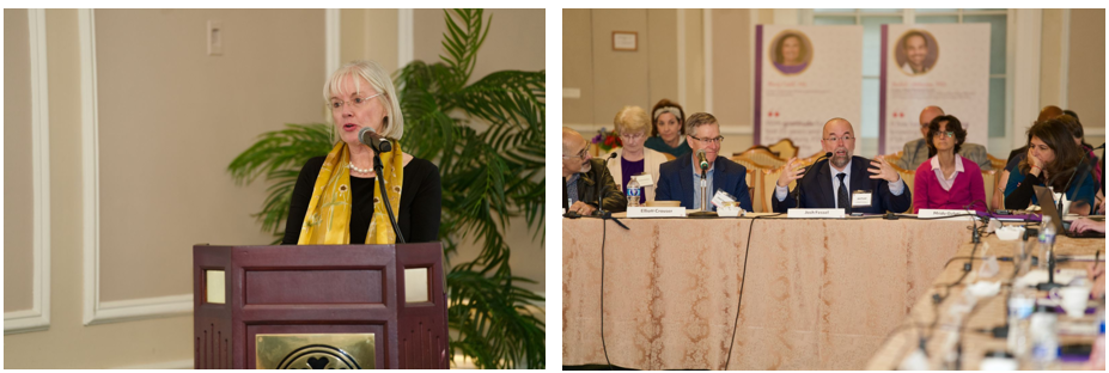
In October 2025, the Foundation for Sarcoidosis Research (FSR) convened a Sarcoidosis Biomarker Summit to build a shared, patient centered roadmap for sarcoidosis biomarkers, drawing on lessons from other disease areas and outlining specific scientific, infrastructure, and funding priorities for future strategic work. 34 experts and specialists, representing 27 institutions, attended the Summit. Attendees were multidisciplinary, including those specializing in pulmonary/critical care, cardiology, rheumatology, neurology, genetics, and biostatistics.
The Summit was a next step in implementing FSR’s 2024 Research Agenda, which identified biomarkers as a critical enabler of progress in diagnosis, monitoring, and treatment for a heterogeneous, multiorgan disease with limited approved therapies. FSR’s goal was to move from biomarkers as an abstract priority to a concrete, consensus roadmap that can guide research investments, partnerships, and infrastructure over the coming decade.
FSR collected a number of insights in preparation for the Summit. To the patient community, FSR asked about the context of conversations with their care team when they were first diagnosed or in conversations about the risk of new manifestations. 106 respondents shared the importance of biomarkers as tools in these conversations, with nearly 70% indicating biomarkers were very important in discussions on diagnostic confirmation, disease management, therapeutic options, and anticipated impact on quality of life.
Patient-reported importance of including biomarkers in conversations between patients and their care teams

Clinicians and researchers attending the conference also answered questions on their views of biomarkers in the clinic. The data revealed that clinician/researcher attendees most strongly prioritized biomarkers for disease monitoring and prediction of progression/remission, whereas patients emphasized a broader set of needs spanning diagnosis, disease monitoring, treatment decision-making, and quality‑of‑life outcomes. There were also indicators of a need for better communication between providers and patients, such as in the case of clinical trials valued low by patients despite often serving as evidence informing treatment decisions. The divergence in emphasis and prioritization amongst members of the sarcoidosis community underscored the need for a strategy that explicitly links biomarker work to patient‑reported outcomes and real decision points across the disease journey.
Alignment between clinicians and patients on biomarker prioritization in sarcoidosis

The Summit also incorporated several case studies, from inflammatory bowel disease (IBD) to Parkinson’s. The Crohn’s & Colitis Foundation’s experience in IBD showed how clearly defining how research tools will be used, using consistent data and methods, and studying large groups of patients across multiple sites can make research more reliable and easier to repeat. The Michael J. Fox Foundation’s Parkinson’s disease work highlighted the value of following patients over time, using shared and standardized datasets, and creating systems that allow researchers to share data before competing on new treatments. Summit discussions centered on how these strategies and approaches could be adapted for sarcoidosis.
Across panels, clinicians framed biomarkers as decision support tools that should quantify risk and trajectory, align with clinical and patient‑reported outcomes, and be usable in real‑world clinical settings and trials. They stressed scalable interoperability of data and definitions without erasing meaningful heterogeneity; including the need for multi‑marker, multi‑modal panels rather than single analytes, panels or tests that can be applied over time for disease and or treatment monitoring, early and continuous patient partnerships, and prioritization of generalizable, diverse, longitudinal cohorts over small, highly selected studies.
The FSR Biomarker Summit culminated in a practical roadmap built on shared foundations, intentional infrastructure, longitudinal validation strategies, and a patient-centered path to clinical translation.

The proposed roadmap centers on: (1) establishing consensus yet flexible definitions for key clinical use cases that can be analytically reconciled across datasets; (2) building centralized data hubs and biorepositories that aggregate clinical, imaging, molecular, and PRO data across sites; and (3) investing in longitudinal, multi‑center cohorts designed for discovery, validation, and clinical utilization of biomarker panels. The report calls for sustained, transparent engagement with patients, regulators, industry, and academic partners to ensure that biomarker advances deliver tangible clinical utility and remain aligned with patient priorities.
A deeper summary of discussion is anticipated to be published as a manuscript or white paper in the future.
How we've been talking about biomarkers since the Summit

FSR's Chief of Staff and Strategy, Tricha Shivas, presented learnings from the Summit to clinicians, researchers, and patient advocates from around the globe for the 2026 Congress of the World Association of Sarcoidosis and Other Granulomatous Disorders (WASOG).


Throughout 2025 and 2026, utilizing learnings from convenings such as the FSR Biomarker Summit, FSR has been building a Clinical Data Registry to serve as a pivotal resource for the research community by supporting high-quality, standardized data collection across a network of expert sarcoidosis centers. This resource will help to better define different disease experiences (such as those patients who progress to additional organ involvement compared to those who go into remission after a single flare). The clinical data on these disease groups will directly inform the subgroups studied in biomarker research.
FSR expresses severe gratitude to the moderators, panelists, and discussants from the 2025 Biomarker Summit as well as the members of the sarcoidosis patient community who participated in the summit planning survey.

Please send any questions or comments to research@stopsarcoidosis.org